Claude Fable 5.2 vs Opus 5.5: Coding, Pricing & Best Uses

By Julian Brooks
MyClaw Editorial
Compare in MyClaw
Compare Claude Fable 5.2 and Claude Opus 5.5 on your own work
Give both models the same task and compare quality, speed, and cost.
AI Takeaway
- Which model should you choose? Start with Opus 5.5 for most coding and knowledge work. Choose Fable 5.2 for demanding reasoning or extended agent tasks where it delivers a measurable improvement.
- How much more does Fable cost? Standard API rates are $8/$40 per million input/output tokens, versus Opus's $4/$20. Fewer tokens or retries can offset that difference on a completed task.
- What does Fable improve? It leads Opus on the coding, reasoning, and chart-reading benchmarks shown below. These are Anthropic-reported results, not a guarantee for every job.
- Do you get more context? No. Both have a 1M-token context window and up to 128K output tokens. The decision rests on execution quality and total cost.
Claude Fable 5.2 vs Opus 5.5 at a Glance
Opus 5.5 is the practical starting point; Fable 5.2 is the model to evaluate when a task needs more capability. Fable launched on November 9, 2026, making it the newer release despite its lower family version number.
The following specifications and standard Claude API prices were checked on November 10, 2026. Prices are in USD.
| Detail | Claude Fable 5.2 | Claude Opus 5.5 |
|---|---|---|
| Claude API model ID | claude-fable-5-2 | claude-opus-5-5 |
| Input / output per million tokens | $8 / $40 | $4 / $20 |
| Context window | 1M tokens | 1M tokens |
| Maximum output | 128K tokens | 128K tokens |
| API default effort | High | Medium |
| Thinking | Adaptive, always on | Adaptive, always on |
| Primary fit | Demanding reasoning and extended agent work | Everyday coding and knowledge work |
Both can take text and images as input and use tools. Their shared context limit means you can compare the same report or repository materials without choosing Fable simply to fit a larger input.
For a broader choice across providers, explore the MyClaw model directory. Exact version availability depends on the provider and your account.

Coding, Reasoning, and Agent Benchmarks Compared
Anthropic's November 9 launch results put Fable ahead on these four evaluations:
| Evaluation | Fable 5.2 | Opus 5.5 |
|---|---|---|
| FrontierCode 2.0 | 49.1% | 45.5% |
| FrontierSWE v2 | 69.9% | 62.3% |
| Humanity's Last Exam, with tools | 74.2% | 67.7% |
| Chartography, without tools | 73.4% | 64.4% |
Scores use each model's highest available effort unless noted; Fable's FrontierCode result uses xhigh. These compare capability at the tested settings, rather than performance at equal cost or latency.
Coding and Long Agent Runs
FrontierCode evaluates whether code changes would be accepted by repository maintainers. FrontierSWE tests extended software-engineering work. Fable's leads are 3.6 and 7.6 percentage points respectively, giving you a reason to test it on difficult changes that span multiple files or require sustained debugging.
The useful distinction is completion: a patch that passes tests, preserves required behavior, and is ready for review. A longer explanation or a larger patch is not evidence of a better coding result.
If you are upgrading from the previous Fable release, our Opus 5.5 vs Fable 5.1 coding comparison covers that earlier choice. Evaluate 5.2 afresh against the same jobs.
Research, Charts, and Ambiguous Tasks
Humanity's Last Exam tests difficult multidisciplinary reasoning; Chartography tests chart interpretation. Fable's lead on both supports evaluating it for analysis that combines technical reasoning with visual evidence.
For a report containing charts and narrative, ask each model to reconcile conflicting figures, identify missing assumptions, and distinguish estimates from reported numbers. Check its answers against the source material. Those checks reveal whether the benchmark advantage translates into a more useful analysis.
API Pricing and the Cost of a Finished Task
At equal uncached token volumes, Fable costs twice as much. Consider a hypothetical request using 100,000 input tokens and 10,000 total billed output tokens:
- Fable 5.2: $0.80 input + $0.40 output = $1.20.
- Opus 5.5: $0.40 input + $0.20 output = $0.60.
This hypothetical example excludes tool charges and other fees. It shows the price of equal token volumes; a real task can consume different amounts on each model.
In Anthropic's FrontierCode 2.0 evaluation, Fable at high effort scored 45.3%, close to Opus's 45.5% at max, for roughly half the cost per task. This illustrates how efficiency can outweigh a higher token rate. The saving is specific to that evaluation.
Repeated context also changes the bill. Both models list cache reads at $0.20 per million tokens, so reading 100,000 cached tokens costs $0.02 on either model. Creating that cache has a separate charge. Compare the actual mix of new input, cache reads, billed output, and tool charges across the full session.
For recurring work, calculate total spend across all attempts ÷ jobs that pass your checks. Include failed attempts and retries in the numerator. Record completion rate and manual repair time alongside that figure so cheap failures do not look like good value.
Fast mode is a separate trade-off: its API input/output rates are $16/$80 for Fable and $8/$40 for Opus per million tokens. Measure time to a usable result before paying for faster generation.
For hosted work, include infrastructure too. MyClaw hosting plans cover the agent's cloud environment; check model-usage billing and any included credits separately.
Effort Settings and Switching from Opus to Fable
Make the Comparison Fair
The API defaults differ: Fable uses high, while Opus uses medium. Sending the same prompt without specifying effort therefore compares different starting configurations. Anthropic describes medium as Fable's default in Claude apps and Claude Code, so do not assume the API default applies everywhere.
Set effort explicitly. Compare both at a shared level, then test the settings each needs to meet your quality target. This separates a model comparison from a configuration comparison; matching effort labels still do not guarantee equal computation.
Leave enough output budget for thinking as well as the answer. If a run stops before returning a usable result, inspect the budget before blaming the model. The Opus 5.5 prompting guide helps establish an Opus baseline before you escalate.
Check the Integration Before You Switch
Changing the model ID is only the start. Check provider access, request options, and tool behavior in your actual integration. Fable requires 30-day data retention on the Claude API unless Anthropic expressly authorizes an exception for a zero-retention arrangement.
Conversation switching also matters. On the Claude API, Fable can read Opus's preserved thinking, but Opus cannot read Fable's. Switching back retains text and tool calls while dropping incompatible thinking blocks, which can affect the next turn's cost and latency.
Test a complete tool-using conversation and a switch back before moving a recurring workflow.
Which Model Fits Your Work?
Use the job's difficulty and cost of failure to set your starting point:
- Routine tickets, summaries, and document work: Start with Opus 5.5. Keep it when the output consistently passes review.
- Stubborn migrations or ambiguous technical problems: Try Fable 5.2 when Opus at an appropriate effort level still misses requirements or stalls.
- Chart-heavy research and conflicting documents: Evaluate Fable when interpretation errors are the bottleneck. Check extracted figures and reasoning against known answers.
- Frequent, repeatable jobs: Favor the configuration with acceptable completion rates and the best total economics, including repair time.
Build a small comparison set: a previously fixed bug, a report with known totals, and a document task with required facts. Keep inputs, tools, and success criteria consistent, repeat each job, and record every outcome. Move work to Fable when its improvement is repeatable and worth the spend.
Then choose how to run the work. Access to files, tools, and persistent context affects an agent's results too. Claude vs MyClaw compares the surrounding product and runtime options.
Put Your Model Choice to Work with a MyClaw Agent
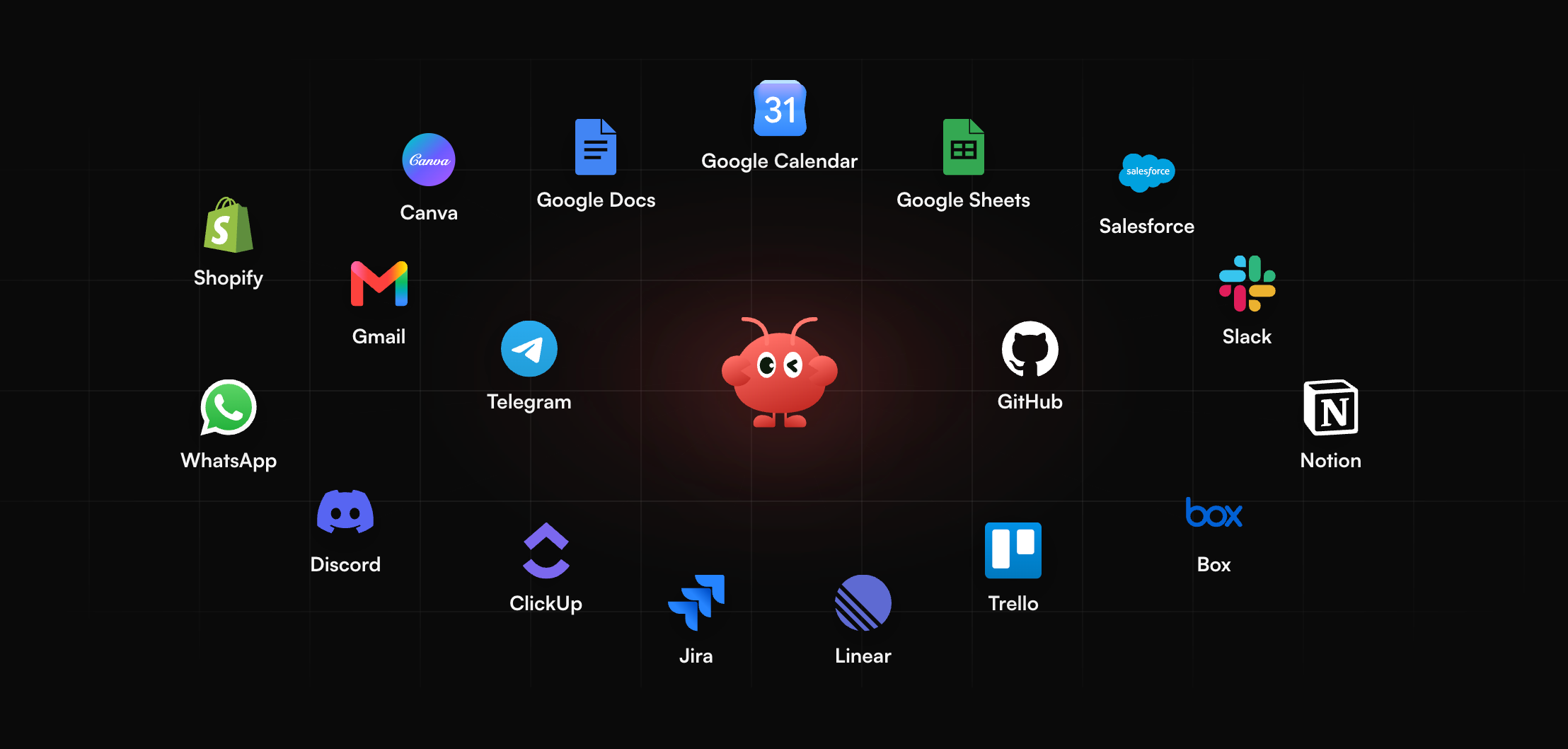
For recurring reports or coding assistance, you also need an agent that stays available between sessions. MyClaw provides managed OpenClaw hosting for a private, always-on agent you can access through the browser or supported messaging channels. It handles the server setup and maintenance so you can focus on the workflow.
- Give your agent a clear job. Launch an OpenClaw workspace and supply a patch, project notes, or reports. Ask for a defined output, such as a change summary with unresolved issues.
- Choose an available model. Check your account's provider and model options before selecting a specific Claude version. Set the task's scope and expected output so the first run is easy to assess.
- Turn a good result into a routine. Review the output and usage, refine the instructions, then repeat or schedule the job. Compare another supported model when quality or cost gives you a reason to switch.
Start with one workflow you already understand. Establish what a good result costs, then expand the agent's responsibilities as its results hold up.
Compare in MyClaw
Compare Claude Fable 5.2 and Claude Opus 5.5 on your own work
Give both models the same task and compare quality, speed, and cost.