GPT-6 Rosalind Review: Access, Benchmarks, Pricing and Limits

By Emma Reed
MyClaw Editorial
MyClaw
Run Best-in-Class AI Agents Now
Run OpenClaw or Hermes Agent on managed MyClaw hosting, so your AI agent stays online, updated, and ready for real work.
AI Takeaway
- What is GPT-6 Rosalind? OpenAI’s trusted-access life-sciences Research deployment of GPT-6 Astra weights for approved organizations (system card addendum, Oct 30, 2026).
- Is it a separately trained biology model? No — same weights as GPT-6 Astra, with no added training data or post-training for this release (OpenAI, Oct 30, 2026).
- Who can use GPT-6 Rosalind Research? Limited approved Research organizations in Work and Codex, plus the API where separately approved — not in the Chat tab (OpenAI Help, Nov 1, 2026).
- What do list rates look like? Standard short-context about $15 / $75 per 1M tokens (cached input $1.50), with a long-context uplift (OpenAI API pricing, Nov 1, 2026).
- How do I keep research or batch agents running overnight? Host OpenClaw or Hermes on MyClaw — always on, scheduled, no server work, works with most popular models.
What GPT-6 Rosalind Is (And Is Not)
GPT-6 Rosalind is OpenAI’s life-sciences Research cut of its flagship reasoning stack. Product copy calls it GPT-6 Rosalind Research; the system card labels GPT-Rosalind-6; the API model ID is gpt-6-rosalind (Help Center and developers catalog, checked Nov 1, 2026). OpenAI published the GPT-Rosalind-6 system card addendum on October 30, 2026.
The headline fact in this GPT-6 Rosalind review is architectural: it uses the same weights as GPT-6 Astra. OpenAI did not add training data or run additional post-training for this release. What changes is deployment posture — fewer refusals on legitimate dual-use biological research topics than general Astra access, while still refusing requests that would meaningfully enable severe biological weaponization. Under the Preparedness Framework, the launch is High in Biological and Chemical capability (below Critical), Critical in Cybersecurity (inherited from Astra), and below High in AI Self-Improvement (system card, Oct 30, 2026).

It is not a Free- or Plus-tier ChatGPT default, and it is not the Discovery tier. Discovery keeps a Rosalind 5.5-class stack and does not unlock GPT-6 Rosalind Research. For the parent flagship outside the life-sciences gate, start with our GPT-6 Astra review; for how Astra sits against the mid-tier Sol line, see GPT-6.1 Sol vs GPT-6 Astra.
Access, Tiers and Hard Limits
A careful GPT-6 Rosalind review should separate the model from the gate. Access runs through OpenAI’s trusted-access program, not a self-serve toggle. OpenAI reviews proposed use, governance, and enterprise-grade security before granting Research access. Research and Discovery are separate approvals: Discovery does not unlock Research (Help, Nov 1, 2026).
GPT-6 Rosalind Research is available to a limited set of approved Research organizations in Work and Codex, and through the API only where separately approved. It is not available in the Chat tab. The Rosalind Academic Plan does not include API access or API credits. Help also notes GPT-Rosalind is not currently available through Amazon Bedrock. In Enterprise workspaces, the model starts in a two-week Admin Preview and is off by default. Approved customers must apply least-privilege controls and use qualified human review before outputs inform experiments, publications, or consequential decisions (Help and system card).
API use, when approved, is framed for internal research tools — not customer-facing products. Context and max-output are not separately published for gpt-6-rosalind on the catalog summary checked for this outline, so do not invent them. For broader GPT-6 family framing, see the GPT-6 Sol review.
Benchmarks: Vendor Gains vs Missing AA Index
OpenAI compared GPT-Rosalind-6 with GPT-Rosalind-5.5 on three life-sciences benchmarks at the highest reasoning budget tested, with matched versions and problem sets (system card, Oct 30, 2026).
| Benchmark | GPT-Rosalind-6 | GPT-Rosalind-5.5 (matched) |
|---|---|---|
| MedChemBench v7 (mean rubric, 99 problems) | 49.6% | 28.9% |
| GeneBench Pro v13 (single-attempt success, 129 problems) | 37.7% | 16.7% |
| LifeSciBench Gold (average, 94 problems) | 61.3% | 44.0% |
Treat the table as vendor-stated evidence, not an independent leaderboard. Metrics differ across rows and should not be averaged. GeneBench used a non-production configuration; LifeSciBench Gold excluded six flagged problems. Artificial Analysis Index v5.0 and OpenAI creator pages checked on November 1, 2026 list GPT-6 Astra, Sol, Terra, and Luna — no Rosalind listing. That is missing independent coverage, not a zero score. For independent coding-agent harnesses on other GPT-6 cuts, see GPT-6.1 Sol for coding.

Pricing, Cache and What You Actually Pay
Official Standard short-context (≤272K input) list rates for gpt-6-rosalind (OpenAI developers pricing, Life sciences models, checked Nov 1, 2026) are $15 input / $75 output / $1.50 cached input per 1M tokens, with cache writes at $18.75 (30 minutes) and $37.50 (12 hours). Long-context (>272K) Standard rates list at $30 / $112.50 / $3.00 cached. On the same page, gpt-6-astra Standard short-context lists at $10 / $50, and legacy gpt-rosalind-research / gpt-rosalind-discovery at $5 / $25. Access is limited to approved internal research through trusted access.
You pay a higher list rate than Astra for the same weights, plus the gate. Budget off live Standard rates, include reasoning tokens in output, and re-check before a campaign. For a lower-list-rate GPT-6.1 mid-tier reference outside Rosalind, see GPT-6.1 Sol.
Pros and Cons
Pros: Astra-class reasoning for approved life-sciences workflows; clear Research versus Discovery split; documented MedChem, GeneBench, and LifeSci gains versus matched Rosalind-5.5; official API ID with published Standard rates; Work and Codex path for eligible orgs.
Cons: Trusted-access gate and Admin Preview friction; unavailable in the Chat tab; API needs separate approval; Standard rates sit above Astra despite identical weights; life-sciences benches are vendor-reported only; no Artificial Analysis Index listing as of Nov 1, 2026; context and max-output are not separately published for the Rosalind ID.
When to Choose GPT-6 Rosalind vs Astra, Discovery or Sol
Choose GPT-6 Rosalind Research when your organization is approved, your work is legitimate life-sciences research that hits Astra’s biology refusals, and you need the Research model in Work, Codex, or a separately approved API. Stay on GPT-6 Astra (or a general mid-tier such as Sol) for coding, agents, and non-life-sciences jobs where you lack trusted-access approval — or where Astra already completes the task without refusal pain. Use Discovery for everyday scientific assist without Research approval; it stays on the Discovery / 5.5-class stack and does not unlock GPT-6 Rosalind Research (Help, Nov 1, 2026).
Score the upgrade on your own matched eval: refusal rate, human-review minutes, and total task cost at the Rosalind list premium — not on the vendor table alone. If Astra already clears your workflow, the higher Rosalind ladder is hard to justify. That decision frame is the useful half of any GPT-6 Rosalind review once the launch numbers are dated.
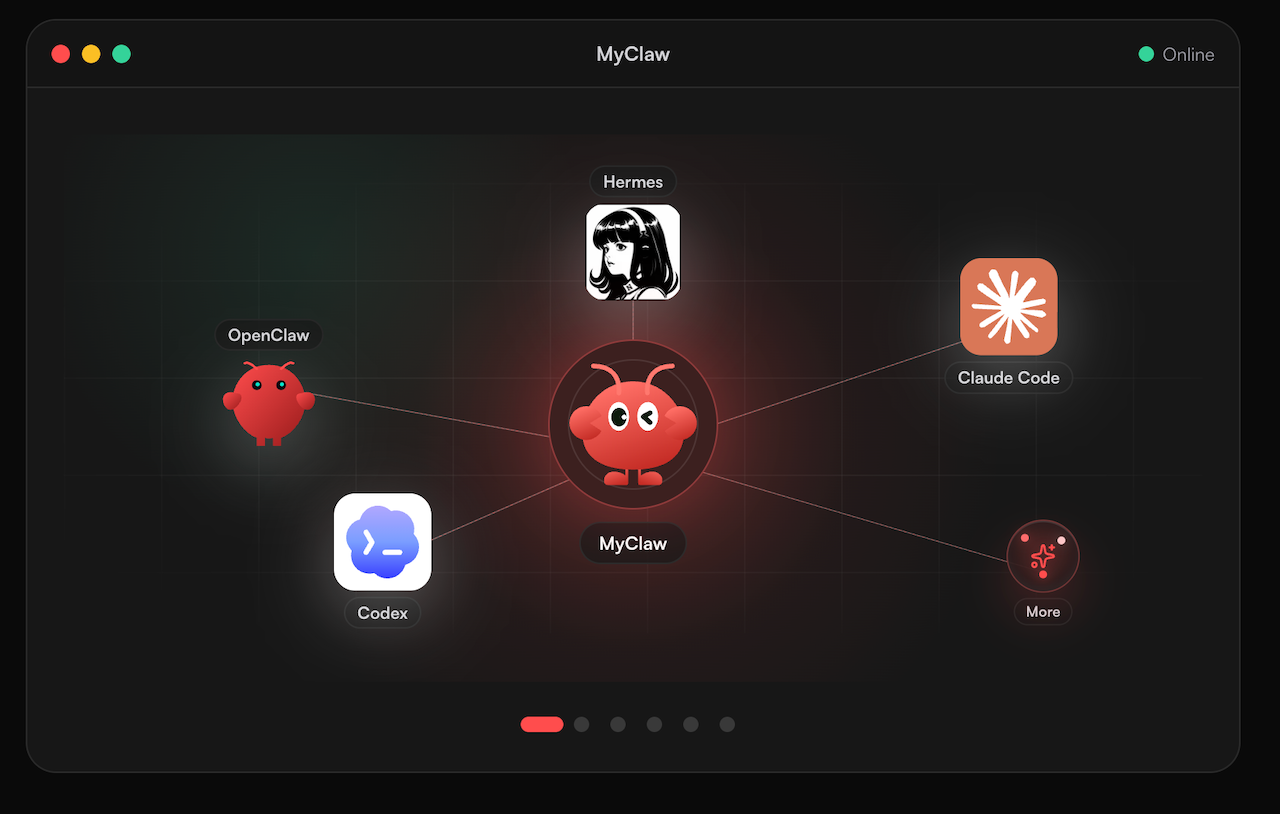
Run Research Agent Jobs on MyClaw: 3 Steps
Long research queues only help if the worker stays awake. MyClaw hosts OpenClaw and Hermes-style agents so prompted pipelines, review loops, and overnight batch jobs can run always on and on a schedule, without babysitting a server. Use models your stack already trusts — MyClaw works with most popular models — and park recurring jobs there instead of on a laptop that sleeps mid-run. For the OpenClaw shape of that stack, see What is OpenClaw.
- Define the job once. Encode dataset pointers, tool allowlists, done criteria, and human-review checkpoints in standing instructions so every scheduled run starts the same way.
- Wire tools and a completion check. Treat failed, partial, or unreviewed outputs as open checklist items; cap automatic retries so a stuck job stops for a person.
- Schedule and leave it on. Point quiet-hour schedules at draft batches, then finish only the takes a reviewer signs off.
That keeps iteration moving overnight — without pinning the host to any single vendor model.
GPT-6 Rosalind Review Conclusion
Treat GPT-6 Rosalind as a gated Research deployment of GPT-6 Astra weights: same core model, fewer biology refusals for approved orgs, and a higher Standard list rate. Read the MedChem, GeneBench, and LifeSci gains as vendor-stated, matched-rerun evidence only, and note that Artificial Analysis still does not list Rosalind on Index v5.0 as of November 1, 2026. Confirm Research versus Discovery approval, Chat-tab absence, and live per-million prices before you budget. If you lack trusted access, or Astra already clears your prompts, stay on the general GPT-6 path. For batch jobs that must finish while you are offline, park an agent on MyClaw with most popular models and a hard stop after a few retries.
Skip the Setup, Run Best-in-Class AI Agents Now
Launch a managed OpenClaw or Hermes Agent workspace in minutes, with always-on hosting, updates, and support handled by MyClaw.