Grok Voice 3.0 Review: Support Gains, Same $0.08 Rate

By Emma Reed
MyClaw Editorial
MyClaw
Run Best-in-Class AI Agents Now
Run OpenClaw or Hermes Agent on managed MyClaw hosting, so your AI agent stays online, updated, and ready for real work.
AI Takeaway
- What is Grok Voice 3.0? SpaceXSI speech-to-speech API model, live Oct 14, 2026;
grok-voice-3.0/grok-voice-latest(vendor, Oct. 29, 2026). - How much does Grok Voice 3.0 cost? $0.08/min ($4.80/hr) plus $0.004 text input—same as 2.0 (vendor pricing, Oct. 29, 2026).
- Did support-call scores jump? Yes. τ-Voice rose from 56.5% on 2.0 to 71.6% on 3.0 (Artificial Analysis, Oct. 29, 2026).
- Is first audio faster than 2.0? No. Time to first audio averages 0.81s vs 0.70s on 2.0 (Artificial Analysis, Oct. 29, 2026).
- Where do non-voice jobs run? On a managed MyClaw OpenClaw or Hermes agent—always on, scheduled (MyClaw does not run Grok Voice).
What Grok Voice 3.0 Is and Who Ships It
This Grok Voice 3.0 review covers the current speech-to-speech model on SpaceXSI’s Voice API. Launch and docs sign as SpaceXSI; Artificial Analysis still labels the provider SpaceXAI—same API family under the former xAI surface. The vendor published the release on October 14, 2026. Model ID grok-voice-3.0 is current; grok-voice-latest points at 3.0; grok-voice-2.0 is deprecated. Release notes say the API shape is unchanged from Grok Voice 2.0, so most stacks only need a model-id pin.
Vendor materials say the same family powers Tesla in-car voice and the vendor’s Grok Bot voice mode. For Starlink support, the vendor states roughly 20,000 calls a day with about 70% resolved with no human—vendor-stated, not an independent audit. For product-line context, start with Grok Bot reviews, then compare phone-agent stacks such as a Lindy AI voice agent overview when the job is inbound/outbound calling rather than raw S2S API access.
Grok Voice 3.0 Benchmarks: Index Lead, Support Jump, Latency Trade
Independent Artificial Analysis Speech-to-Speech figures (live board re-checked October 29, 2026; vendor launch table dated October 13, 2026 matched Index and τ-Voice) are where the upgrade earns its name.
| Metric (AA board, checked Oct 29, 2026) | Grok Voice 3.0 | Grok Voice 2.0 | Nearby peer |
|---|---|---|---|
| Speech-to-Speech Index | 86.9 (#1) | 81.3 | GPT-Live-1 Astra medium 83.2 |
| τ-Voice (agentic support) | 71.6% (#2) | 56.5% | Astra medium 74.5% |
| Task Success Rate | 94.8% (#1) | 94.6% | — |
| Big Bench Audio (speech reasoning) | 98.5%* | 97.2%* | Astra medium 90.1%* |
| Full Duplex / conversational dynamics | 97.0% | 95.1% | Astra medium 94.9% |
| Arena preference Elo | 1064 | 993 | Astra medium 1037; some Gemini Live entries higher |
| Time to first audio | 0.81s | 0.70s | Astra medium 1.34s |
*Big Bench Audio percents from the vendor’s October 13, 2026 table (AA summary cites 98.5% for 3.0; live grid rounds 3.0 speech reasoning to 99%).
The support-task jump is the story: τ-Voice moves from 56.5% to 71.6%. That matters if your calls look like the agentic loads in a best AI customer support agent for SaaS brief. Index leadership at 86.9 does not mean first on every row—Astra medium still leads τ-Voice at 74.5%, and live preference Elo sits behind some Gemini Live entries even at 1064. First audio slowed versus Grok Voice 2.0 (0.81s vs 0.70s) while staying under one second. The vendor quotes EVA-Bench (ServiceNow) accuracy at 74% as highest—label that vendor/third-party, not the AA Index.

Pros: Grok Voice 3.0 — Index lead; large τ-Voice jump versus Grok Voice 2.0; sub-1s first audio among top Index peers; API shape and list price unchanged.
Cons: Grok Voice 3.0 — Slower first audio than Grok Voice 2.0; not #1 on τ-Voice or live preference Elo; production answers still depend on your tools and docs.
Grok Voice 3.0 Pricing: $0.08 a Minute, Same as 2.0
Grok Voice 3.0 pricing on docs.x.ai (checked October 29, 2026) lists Speech to Speech grok-voice-3.0 at $0.08 per minute ($4.80 per hour) plus $0.004 per text input—the same list row as deprecated grok-voice-2.0. Separate Voice modes are not the S2S rate: Speech to Text is $0.10/hr REST or $0.20/hr streaming, and Text to Speech is $15 per 1M characters. Keep those lines out of an S2S budget sheet.
Worked example (our arithmetic on the list rate): 500 calls × 4 minutes = 2,000 minutes → $160 per day of list S2S before text inputs. Artificial Analysis’s measured cost per hour of input audio on its Big Bench Audio subset is $4.80 for this model—matching the list hour rate—versus Astra medium at $5.83, Gemini 3.8 Live Ext. Thinking High at $3.50, and GPT-Realtime-2.1 High at $10.75 (AA board, checked Oct. 29, 2026; measured run cost is not always list price). The upgrade case is the same list rate as Grok Voice 2.0 with higher support-task scores—not a new discount tier. Teams building an AI customer service agent stack should pin the model id, re-run a noisy-call sample, and score completed tickets against the bill.
Who Should Use Grok Voice 3.0 (and Who Should Bake Off)
Our recommendation as of October 29, 2026 from vendor docs plus Artificial Analysis: pin or switch to grok-voice-3.0 if you already call grok-voice-latest or still run Grok Voice 2.0 and need the τ-Voice lift. Bake off against GPT-Live-1 Astra medium when pure support-task completion edges first-audio latency. Wait if language coverage or knowledge tooling is the real blocker—confirm live language lists on vendor docs first. Voice API spend ends when the call ends; always-on ticket and research work still needs a separate agent layer. For that split, read conversational AI agents for businesses and the Grok Bot vs Hermes agent comparison—Hermes is the confirmed MyClaw-adjacent path for non-voice follow-through.
Run Always-On Follow-Through on a MyClaw Agent
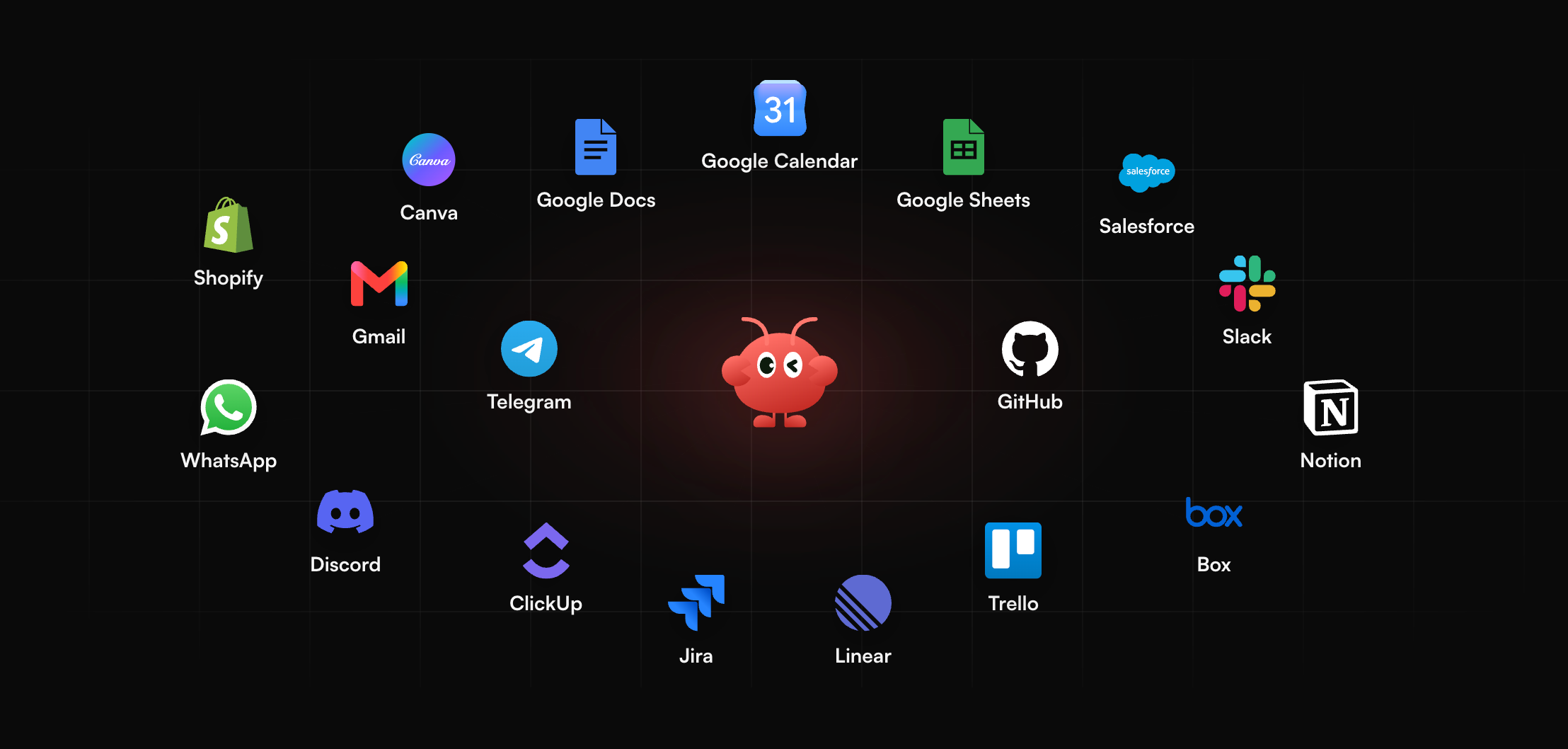
Grok Voice 3.0 ends when the call ends. Ticket updates, research digests, CRM notes, escalation queues, and scheduled follow-ups still need an agent that keeps working after you hang up. The Voice API is the conversation layer. The always-on layer is what prevents a good call from becoming a forgotten ticket.
MyClaw hosts managed OpenClaw or Hermes agents for that next layer. The agent stays always on. Scheduled jobs fire after you close the tab. You do not set up or patch a server. Agents here work with most popular models. Light follow-ups and heavier reasoning can share one workspace. MyClaw does not run Grok Voice 3.0. Keep the Voice API where the call lives. Use MyClaw for the execution that starts once the call is done—summaries, field updates, and the next-day nudge that used to wait on a human queue.
A concrete week beats a vague plan:
- Pick one recurring task that begins after a support call—ticket summaries, CRM field updates, or a next-day follow-up draft from the transcript notes you already keep.
- Put that task on a MyClaw agent with the same brief you would give a teammate, including the links and files the agent may touch.
- After a week, compare what stayed done without you babysitting the session: answers kept, retries needed, and time you got back.
Keep Grok Voice 3.0 for the call. Keep MyClaw for the always-on follow-through. When the Voice API stops, the agent should not.
Grok Voice 3.0 Verdict
- Default Grok Voice 3.0 when you need Speech-to-Speech Index leadership and a clear τ-Voice jump at the same $0.08/min list rate as Grok Voice 2.0.
- Pin
grok-voice-3.0explicitly so a futurelatestmove does not surprise a production queue. - Bake off Astra medium when τ-Voice completion is the only score that matters and first audio can wait.
- Accept 0.11s slower first audio versus Grok Voice 2.0 if support-task completion is the floor bottleneck.
Retest your own noisy calls before you trust any leaderboard. Change the model id. Leave the call path alone until the sample set passes.
Grok Voice 3.0 Conclusion
This Grok Voice 3.0 review lands on a clear trade: Artificial Analysis shows a Speech-to-Speech Index lead at 86.9 and a τ-Voice climb from 56.5% to 71.6%, while vendor list pricing stays $0.08 per minute plus $0.004 text input—the same stickers as Grok Voice 2.0 (pricing page and AA board re-checked October 29, 2026). The cost of that jump is slightly slower first audio (0.81s vs 0.70s) and second place on τ-Voice versus Astra medium, with live preference Elo strong at 1064 but not first on the board. Task Success and Big Bench Audio still move the right way.
Migration is mostly a model-id pin. The API shape is unchanged per vendor release notes. Treat Starlink’s roughly 20,000 daily calls and ~70% no-human resolution as vendor-stated volume, not as your forecast. Keep Grok Voice 3.0 on the call path. Park non-voice follow-ups on a managed MyClaw OpenClaw or Hermes agent so tickets and scheduled work continue after the session ends. The product under review is the Voice API; this draft does not claim MyClaw can call Grok Voice.
Pin grok-voice-3.0, run a regression set of real calls this week, then move one post-call job onto a hosted agent and measure what stays done.
Skip the Setup, Run Best-in-Class AI Agents Now
Launch a managed OpenClaw or Hermes Agent workspace in minutes, with always-on hosting, updates, and support handled by MyClaw.