Opus 5.5 Alternatives: 6 Models Ranked by Cost per Task and Wait

By Nathan Cole
MyClaw Editorial
MyClaw
Run Best-in-Class AI Agents Now
Run OpenClaw or Hermes Agent on managed MyClaw hosting, so your AI agent stays online, updated, and ready for real work.
Start HostingAI Takeaway
- Which model comes closest to Opus 5.5 on independent tests? Sonnet 5.5. At max effort it scores 56 on the Artificial Analysis index, two points under Opus 5.5 at max (58), the smallest gap here (independent, Oct 26, 2026).
- Which alternative gives the lowest bill per finished task while staying near the top? GPT-6.1 Sol. Artificial Analysis measures $0.72 per index task at a score of 52 with max effort, against Opus 5.5's $5.98 at max (independent, Oct 26, 2026).
- Do I have to leave Opus 5.5 at all? Often not. At high effort, Opus 5.5 scores 54 for $1.82 per task and sends a first token in about 31 seconds (Artificial Analysis, Oct 26, 2026).
- Which of these alternatives can I self-host today? DeepSeek V4.1 Flash 1017, whose weights anyone can download (MIT). Artificial Analysis listed every other pick here as proprietary on Oct 26, 2026.
- How do I keep a long-running agent working on whichever model I settle on? Host it on MyClaw, where OpenClaw and Hermes agents remain online, follow schedules and need no server work.
What You Are Replacing: The Opus 5.5 Baseline
Opus 5.5 is Anthropic's flagship Opus model, released Sep 22, 2026. Vendor-stated terms (Anthropic docs, checked Oct 26, 2026): $4 per 1M input tokens, $20 per 1M output tokens, a 1M-token window, and medium effort by default. Batch jobs are billed at half price.
Independent numbers come from Artificial Analysis (Oct 26, 2026). With max effort, Opus 5.5 holds the top index score of 58, costs $5.98 per index task, streams at 96.8 tokens per second and needs 676.75 seconds before its first token, because it thinks at length first.
That gives three concrete reasons to look elsewhere: the per-task bill, a first-token wait of over eleven minutes at max, and a single closed vendor. For the model on its own, see our in-depth Opus 5.5 review. Here, each pain point gets matched with a model that fixes it.
Try This First: Opus 5.5 at a Lower Effort Setting
The fastest alternative is the same model with a lower dial. Artificial Analysis tested five effort levels (independent, Oct 26, 2026):
- Max: index 58, $5.98 per task, 676.75 s first token
- Xhigh: index 56, $3.46 per task, 119 s first token
- High: index 54, $1.82 per task, 31 s first token
- Medium (vendor default): index 51, $1.34 per task, 16 s first token
- Low: index 42, $0.55 per task, 6 s first token
High effort keeps 54 of 58 points for about 30% of the max bill (our arithmetic: $1.82 ÷ $5.98, assuming your tasks resemble the index). Prompts, API and tooling stay the same. If high effort is still too slow or too costly, the six models below are the real alternatives.
Opus 5.5 Alternatives Compared Side by Side
List prices are vendor-stated per 1M input/output tokens. Every other column is an independent Artificial Analysis measurement, checked Oct 26, 2026, at the effort shown.
| Model (effort) | List price in/out (vendor) | AA index | AA cost per task | AA output speed | AA first token | Public weights |
|---|---|---|---|---|---|---|
| Opus 5.5 (max), baseline | $4 / $20 | 58 | $5.98 | 96.8 t/s | 676.75 s | No |
| Sonnet 5.5 (max) | $2 / $10 | 56 | $5.46 | 138 t/s | 388.89 s | No |
| Kimi K3.1 Pro (default) | $2 / $10 | 55 | $2.11 | 52.2 t/s | 2.97 s | No |
| Gemini 4 Argon (high) | $2 / $10 | 53 | $1.99 | 80.9 t/s | 57.01 s | No |
| GPT-6.1 Sol (max) | $2 / $10 | 52 | $0.72 | 62.3 t/s | 246.63 s | No |
| DeepSeek V4.1 Flash 1017 (max) | $0.30 / $1.20 | 45 | $0.26 | 169 t/s | 1.19 s | Yes, MIT |
| MiniMax M3.1 Flash (default) | $0.15 / $0.60 | 43 | $0.22 | 116.2 t/s | 1.10 s | No |
Near-Frontier Alternatives That Stay Close to Opus Scores
Sonnet 5.5
Best for: staying on Anthropic's API and prompts at half the list rate.
Sonnet 5.5 lists at $2/$10, with cache reads at $0.10 and high as its default effort (vendor, Oct 26, 2026). The catch is per task: at max it still costs $5.46 per index task on Artificial Analysis, near Opus at max, because it writes many tokens. At xhigh it scores 52 for $2.01 with a 28-second first token. Our Sonnet-versus-Opus breakdown shows where they split.
Kimi K3.1 Pro
Best for: agent runs that need a near-top score plus a quick first token.
Kimi K3.1 Pro, released Oct 23, 2026, scores 55 for $2.11 per task (Artificial Analysis, Oct 26, 2026), roughly a third of the Opus max figure (our arithmetic). Its first token arrives in 2.97 seconds, yet it streams at just 52.2 tokens per second, so long replies finish slowly. Its weights were not public as of Oct 26, 2026. The Kimi head-to-head has the detail.
Gemini 4 Argon

Best for: Google Cloud teams after a balanced score, bill and wait.
Gemini 4 Argon shipped Sep 30, 2026 at $2/$10 with 1M tokens of context (vendor list price, via Artificial Analysis). At high effort it scores 53 for $1.99 per task, streams at 80.9 tokens per second and starts answering in 57 seconds (independent, Oct 26, 2026).
Value Alternatives That Cut the Per-Task Bill
GPT-6.1 Sol
Best for: high-volume work that still needs a score in the low 50s.
GPT-6.1 Sol, released Sep 29, 2026 at $2/$10 (vendor list price), scores 52 with max effort for $0.72 per task (Artificial Analysis, Oct 26, 2026). It writes far fewer tokens than Opus, which keeps the bill low, but it thinks for 246.63 seconds before the first token. Our OpenAI-versus-Anthropic flagship test weighs that trade.
DeepSeek V4.1 Flash 1017
Best for: self-hosting, and interactive loops where latency beats the last few index points.
Released Oct 17, 2026, this is the only open-weights pick: MIT license, 552B total and 16B active parameters (Artificial Analysis, Oct 26, 2026). DeepSeek's API lists it at $0.30/$1.20. Independently it scores 45, costs $0.26 per task, streams at 169 tokens per second and sends its first token in 1.19 seconds. It is wordy, with 210M tokens on the index run.
MiniMax M3.1 Flash
Best for: the lowest per-task bill on this list, for routine agent steps.
MiniMax M3.1 Flash shipped Oct 19, 2026 at $0.15/$0.60 (vendor list price, via Artificial Analysis). It scores 43 for $0.22 per task, with a 1.10-second first token and 116.2 tokens per second (independent, Oct 26, 2026). Opus at max costs about 27 times as much per task (our arithmetic: $5.98 ÷ $0.22, index tasks only).
Keep Any of These Models Running Nonstop on MyClaw
A model choice is just step one. At high effort one task can take minutes, and agents that watch inboxes, repos or reports must stay up between tasks, not just while your laptop is open.
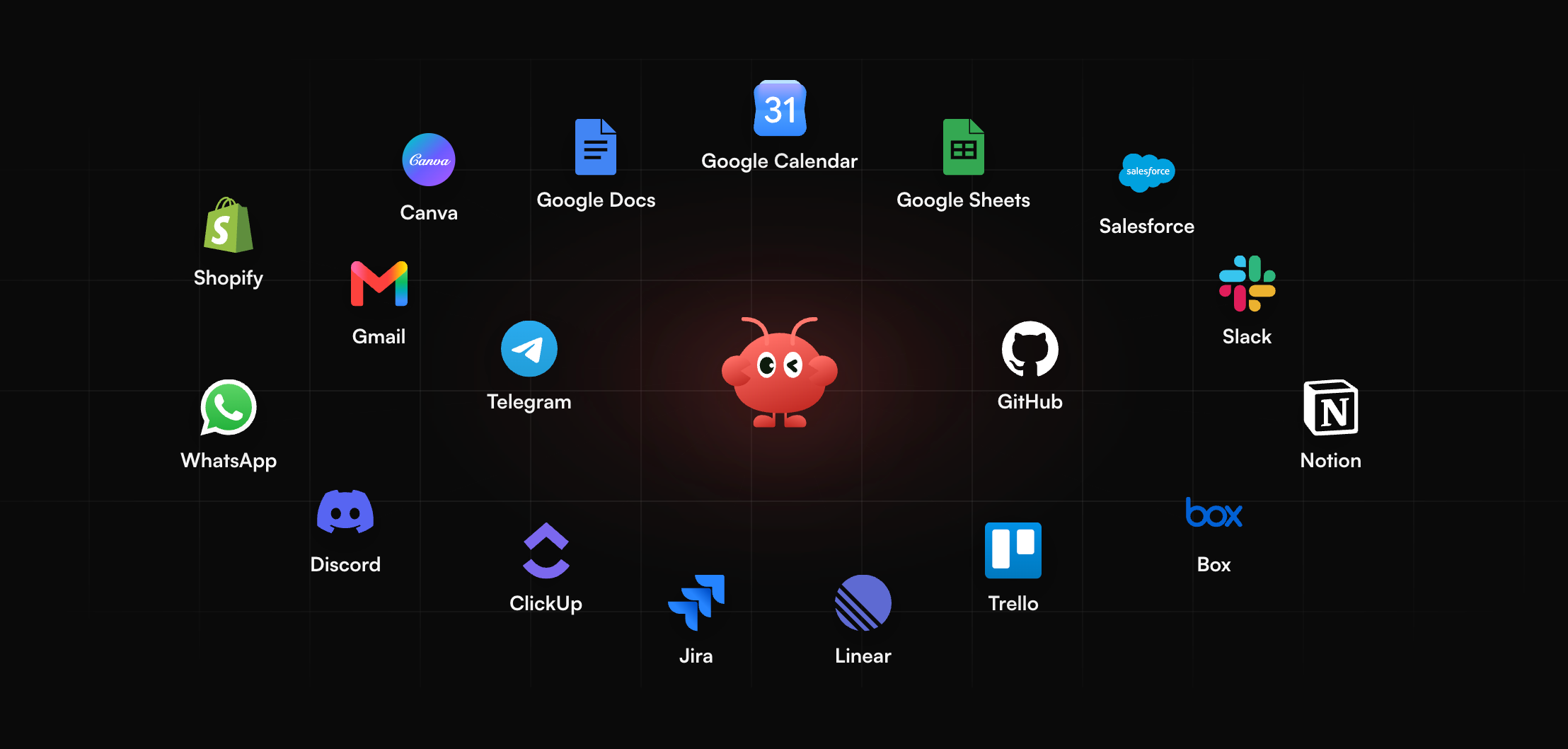
Think of MyClaw as a managed home for personal agents. Your OpenClaw or Hermes agents stay live day and night there, take on scheduled and recurring jobs, and you never rent or patch a server. Model choice stays open, as MyClaw supports most popular models; two value picks above, DeepSeek V4.1 Flash plus MiniMax M3.1 Flash, are on that list. So you can trial a model swap on a real, always-on workload. New to agents? For background, see the OpenClaw primer and this Hermes overview.
- Make a MyClaw account in your browser.
- Choose OpenClaw or Hermes as your agent, then select its model.
- Describe the job, set a schedule and let it run.
Pick by Your Bottleneck
- Bill: drop Opus 5.5 to high effort ($1.82 per task). Still too much? Move to GPT-6.1 Sol ($0.72) or, for routine steps, MiniMax M3.1 Flash ($0.22).
- Wait: DeepSeek V4.1 Flash 1017 (1.19 s), MiniMax M3.1 Flash (1.10 s) and Kimi K3.1 Pro (2.97 s) answer in seconds.
- Score: Sonnet 5.5 (56) and Kimi K3.1 Pro (55) sit closest to Opus at max.
- Lock-in: DeepSeek V4.1 Flash 1017 is the only pick with public weights today.
Figures: Artificial Analysis (independent) or vendor list prices, checked Oct 26, 2026.
Conclusion: The Best Opus 5.5 Alternative Depends on Which Cost Hurts
No single model beats Opus 5.5 at max on every axis; it still leads the index at 58. Few jobs need all 58 points at $5.98 per task and an eleven-minute first token, though. Lower its effort first. If you still need to move, Sonnet 5.5 and Kimi K3.1 Pro hold the score, GPT-6.1 Sol trims the bill and the two Flash models cut wait and cost. Trial two or three on real work first; an index is a guide, not your workload.
Skip the Setup, Run Best-in-Class AI Agents Now
Launch a managed OpenClaw or Hermes Agent workspace in minutes, with always-on hosting, updates, and support handled by MyClaw.
Get Started